
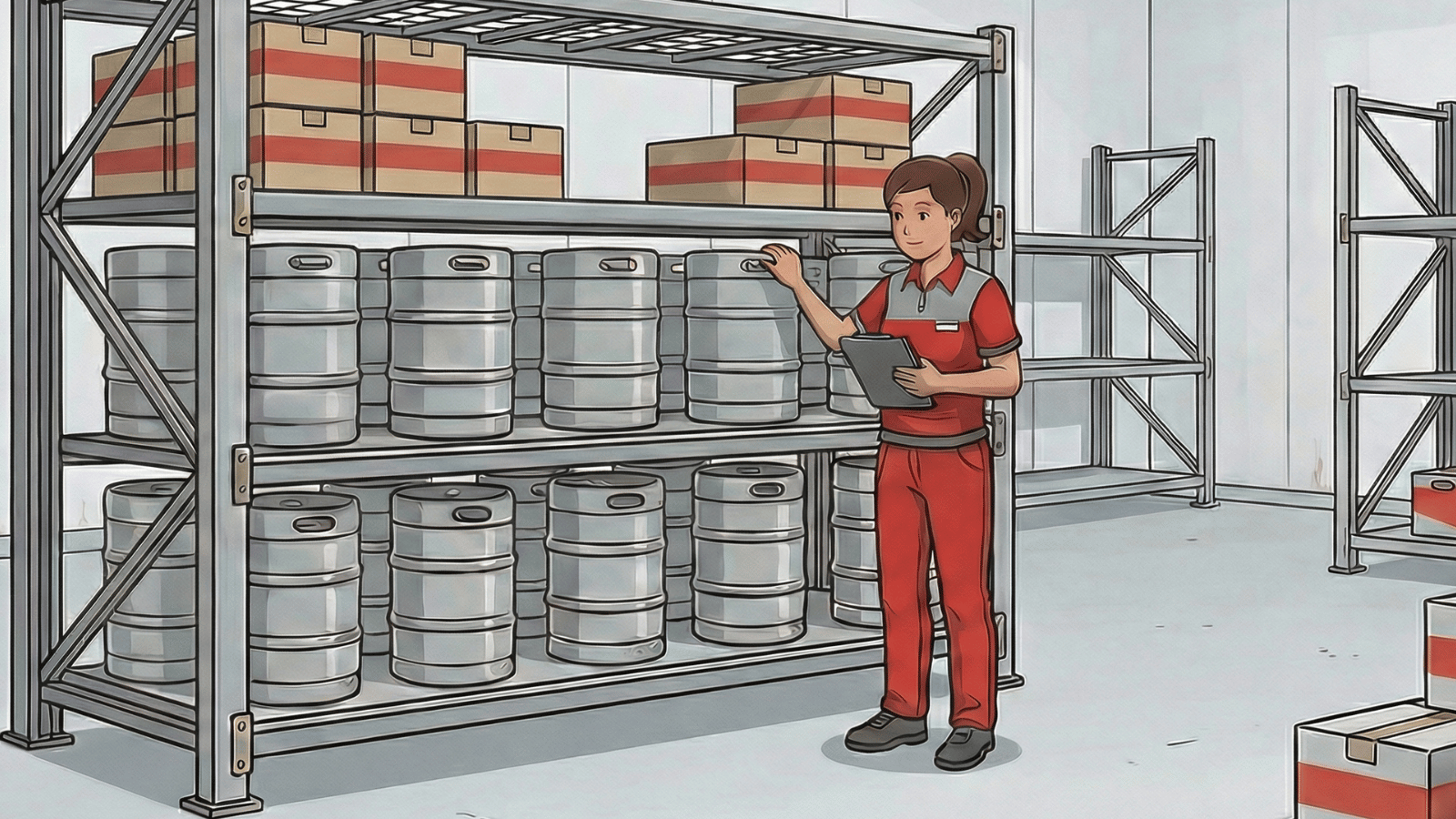
A keg rack can meet every published requirement yet still create long-term issues inside a walk-in cooler. On paper, you can confirm the footprint, verify the load rating, and approve the material listed on the spec sheet. But in daily operation, sustained weight, moisture, and product movement often determine whether the shelving was engineered for long-term performance.
Durable keg storage design focuses on structural resilience under stress, not just compliance at installation.
What Keg Rack Specifications Actually Cover
Keg rack specifications define measurable criteria such as dimensions, tier count, stated load capacity, and material classification. These details confirm layout compatibility and projected weight limits during planning.
Specifications reflect static test conditions. They do not measure how a structure performs after years of loading cycles, shifting weight distribution, and constant condensation. A rack can meet its published capacity at installation and still lose rigidity as cumulative stress affects structural components over time.
What Keg Shelving Deals With
Staff move full kegs in and out of walk-in coolers continuously. Inventory turns quickly, often under time pressure, and weight rarely distributes evenly across every tier. Moisture remains present at all times. Structural joints are exposed to temperature fluctuation and condensation for the life of the installation.
Those forces introduce incremental stress that builds gradually. Durable keg shelving design anticipates those conditions and accounts for long-term loading patterns rather than relying solely on static capacity ratings.
Static Load Ratings vs. Structural Resilience
Load ratings assume evenly distributed weight under defined testing conditions. Cooler operations rarely mirror those assumptions. Concentrated loads, shifting placement, and repeated rotation change how stress is applied across the structure.
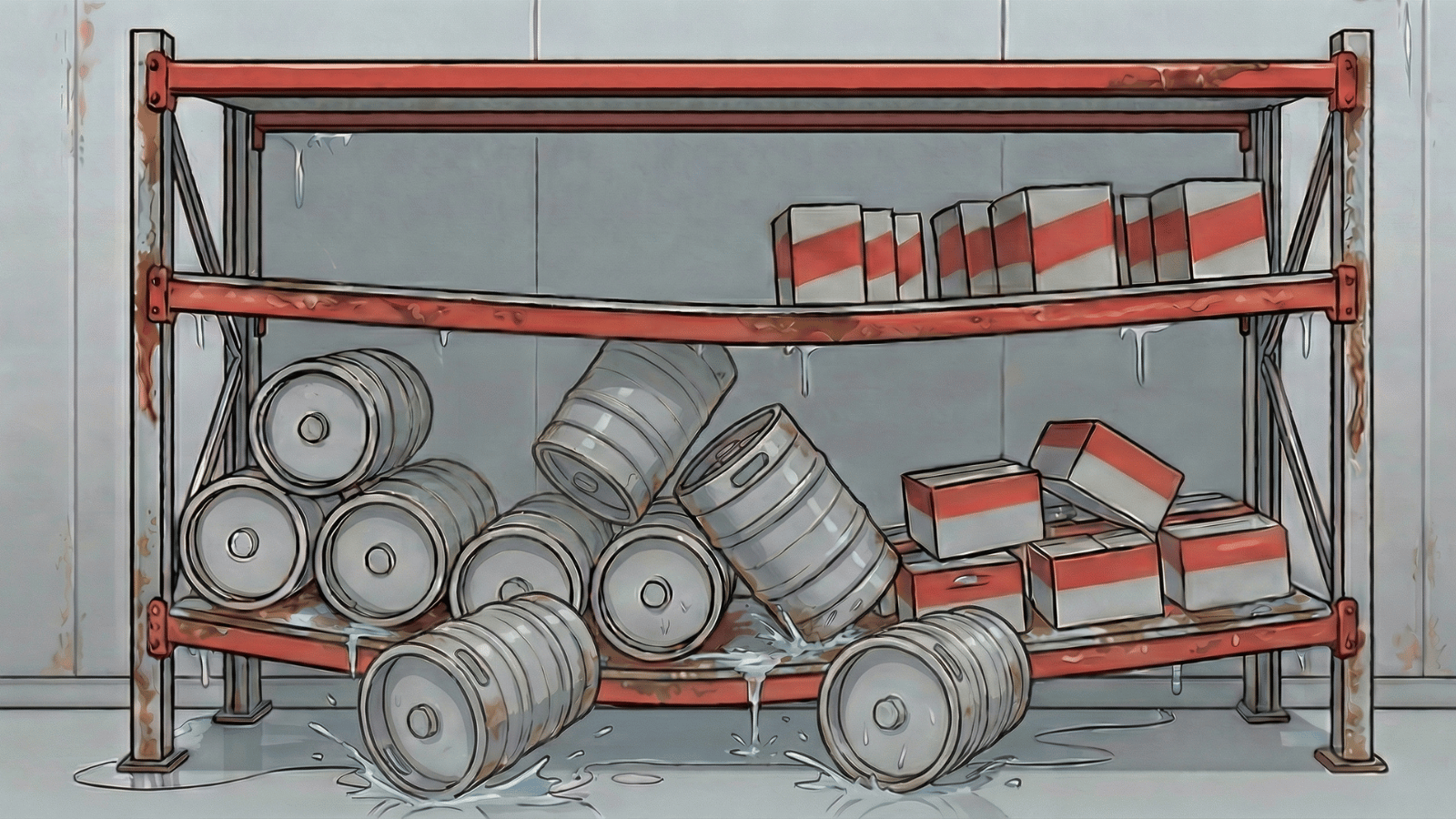 When shelving is engineered only to meet minimum keg rack specifications, there is little margin for long-term wear. Over years of heavy use, that limited buffer can appear as shelf deflection, frames that no longer sit square, or corrosion that weakens connection points.
Durable keg rack design builds in structural strength from the start. It allows shelving to withstand repeated loading, shifting weight, and moisture exposure without gradually losing alignment.
Material Selection Drives Performance
Material choice directly affects how shelving performs under sustained heavy loads.
Aluminum shelving can meet required dimensions and published load ratings, and it often carries a lower initial purchase price. In high-density keg storage, however, aluminum flexes more under sustained, concentrated loads. Repeated loading and rotation can increase deflection over time, potentially shortening the usable service life in demanding cooler environments.
Hot-rolled structural steel resists that movement. It maintains rigidity under heavy kegs and repeated handling, supporting a stable, level surface across years of use. When paired with a durable protective finish, steel also performs more consistently in the damp conditions inside a cooler.
Rigid connection points limit gradual frame movement. Protective finishes guard against moisture-driven corrosion at structural joints. Hot-dipped galvanizing bonds zinc to steel at a molecular level, creating corrosion protection that outperforms surface-applied coatings in wet environments.
The Difference Appears Over Time
Two shelving systems can share the same drawings and load ratings. On paper, both meet keg rack specifications, and at installation, they look comparable. Over time, the difference becomes visible. One remains level and structurally sound. The other begins to show deflection or corrosion at stress points.
Shelving rarely fails all at once. More often, it wears down gradually and requires replacement sooner than expected. Replacing shelving inside an active cooler requires removing, staging, and reloading product. Staff time shifts from operational priorities to clearing and restocking the space. What initially appeared to be a lower equipment cost can result in repeated capital purchases and additional labor hours.
The Bottom Line
Keg rack specifications support layout planning and confirm stated load capacity. They do not determine how a shelving system will perform after years of repeated loading, moisture exposure, and daily movement inside a walk-in cooler.
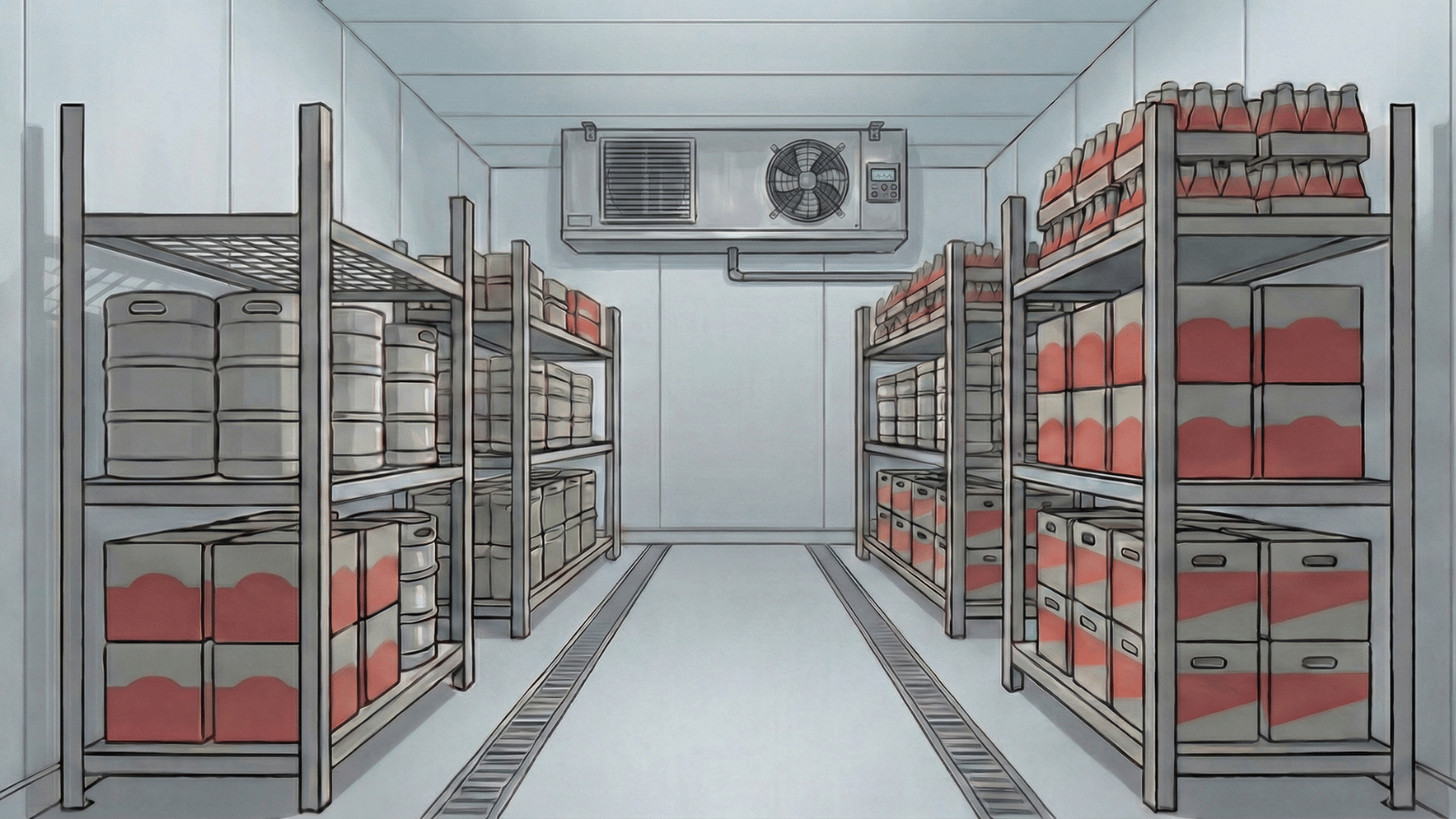 Purchasing structurally sound keg racks built for sustained weight and wet environments reduces the need for premature replacement. When shelving maintains its rigidity and alignment over time, operators avoid repeat capital purchases and the labor required to empty, remove, and reinstall racks inside active coolers. The return on investment is realized through longer service life, fewer replacement cycles, and uninterrupted cooler operation.
Cooler Concepts builds its keg racks and shelving from hot-rolled structural steel with protective finishes engineered for sustained load and moisture exposure. In more than 30 years in business, Cooler Concepts has not received a warranty claim on its shelving. That record reflects engineering built for long-term performance, which means more ROI for owners and more time for staff to provide customer service.
Frequently Asked Questions About Durable Keg Rack Design
What defines durable keg rack design?
Durable keg rack design accounts for sustained weight, repeated loading cycles, moisture exposure, and long-term structural stability. It prioritizes material strength, rigid connections, and corrosion protection beyond basic specification requirements.
How is having a durable keg rack design different from meeting basic specifications?
Meeting keg rack specifications confirms fit and stated load capacity. Durable design ensures the shelving maintains alignment, resists corrosion, and withstands years of daily use without premature deflection or structural fatigue.
Why does material choice matter in durable keg storage design?
Material determines how shelving handles repeated heavy loads and damp cooler conditions. Structural steel maintains rigidity and resists long-term flexing under sustained weight, supporting longer service life in high-density keg environments.
